
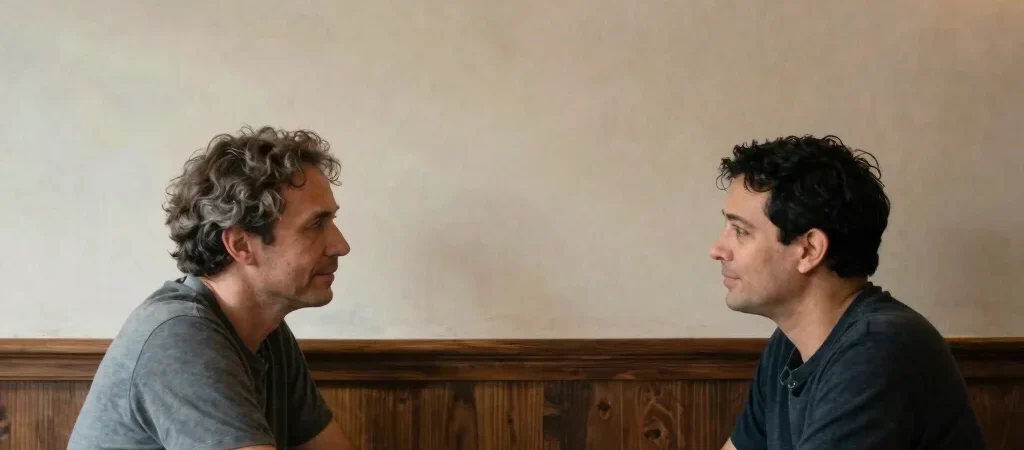
Past Lives begins with a question that the film refuses to answer neatly: what are we seeing when we look at two people who share a history? Nora and Hae Sung were childhood friends in Seoul; years later, they meet again in New York, where the distance between their lives is as present as the affection between them.
The shape of a reunion
Celine Song gives their conversations room to wander, hesitate and double back. The story moves across time without making each reunion feel like a dramatic checkpoint; instead, small shifts in what Nora and Hae Sung can say to one another tell us how much has changed.
That patience is the film’s strength. It lets the characters be more than symbols of a lost possibility, even as the idea of the life not lived hangs between them. Their connection matters, but it does not cancel out the separate choices that have made them who they are.
A city between them
New York is not simply a backdrop for Nora’s adult life. Its streets and apartment interiors give the meetings a present-tense, practical quality: these two people have to find somewhere to sit, decide what to say, and then go back to the lives waiting for them.
What the ending leaves
The performances from Greta Lee and Teo Yoo make restraint feel active rather than withheld. By the final stretch, I was less interested in imagining an alternate ending than in the way the film lets Nora feel several kinds of attachment at once. Past Lives does not settle the what-if; it leaves you with the quieter question of how to honour a past without mistaking it for a plan.