
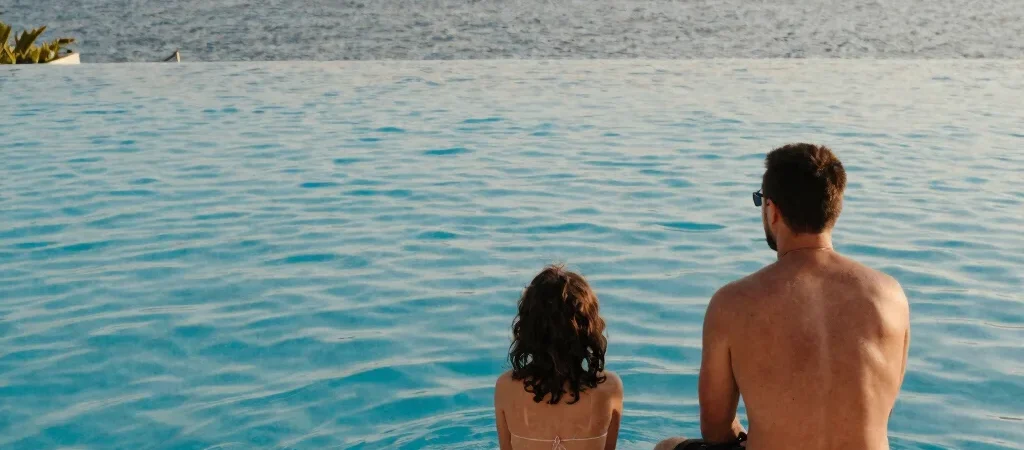
In Aftersun, Sophie looks back on a holiday in Turkey with her father, Calum. What she remembers is not arranged into a tidy account of what happened. Charlotte Wells builds the film from glimpses: poolside routines, small conversations and camcorder footage that seems to hold more than anyone can say aloud.
A holiday in fragments
The structure asks us to notice how memory edits. One moment lingers; another disappears into the ordinary rhythm of a resort. That looseness may feel elusive at first, but it suits Sophie’s position: she is present for the holiday without having the adult knowledge to interpret everything she sees.
Frankie Corio gives young Sophie a watchful ease, taking in the world around her without turning every look into a clue. Paul Mescal, as Calum, makes warmth and unease coexist. His performance stays attentive to the father Sophie can reach, and the parts of him that remain just out of her grasp.
The camera remembers differently
The camcorder footage adds another layer to the film’s point of view. Its images feel casually made, but looking back gives them a different charge: an ordinary afternoon can become precious simply because it was recorded. Wells avoids treating the footage as an explanation of Calum; its gaps matter as much as its images.
What stays after the holiday
The film’s editing lets present and remembered images touch without spelling out exactly how to read them. That restraint makes the ending linger, particularly in the contrast between a father and daughter sharing a holiday and the adult Sophie trying to assemble its meaning. Aftersun left me thinking about how memory can preserve a feeling long after the details have blurred.